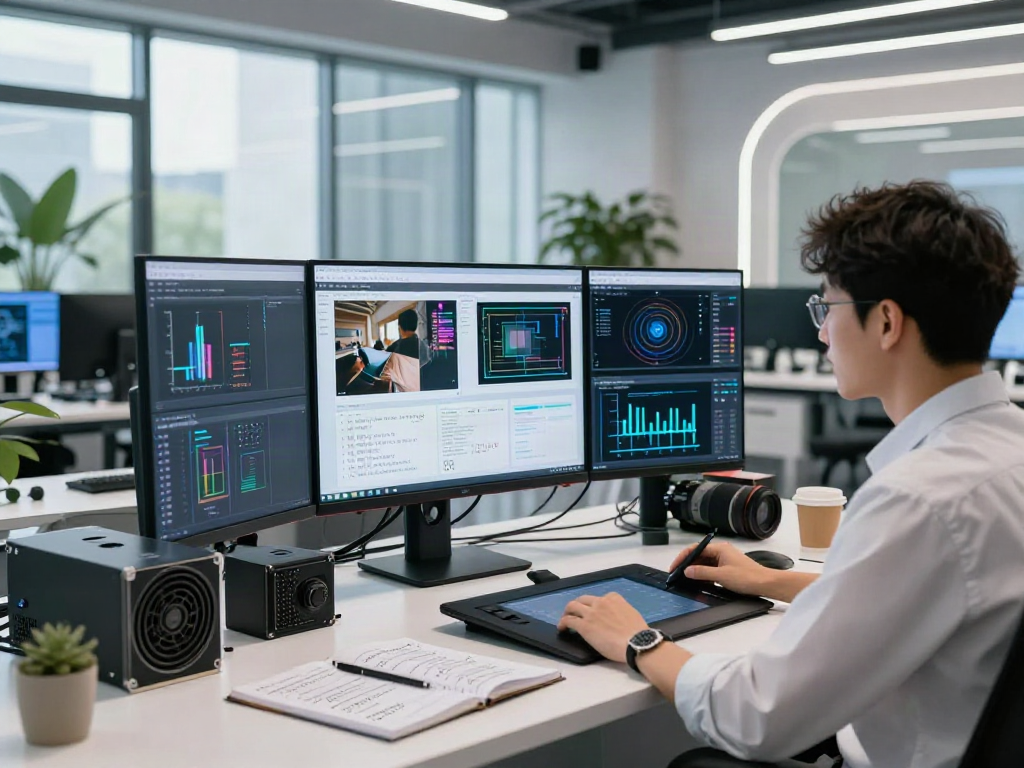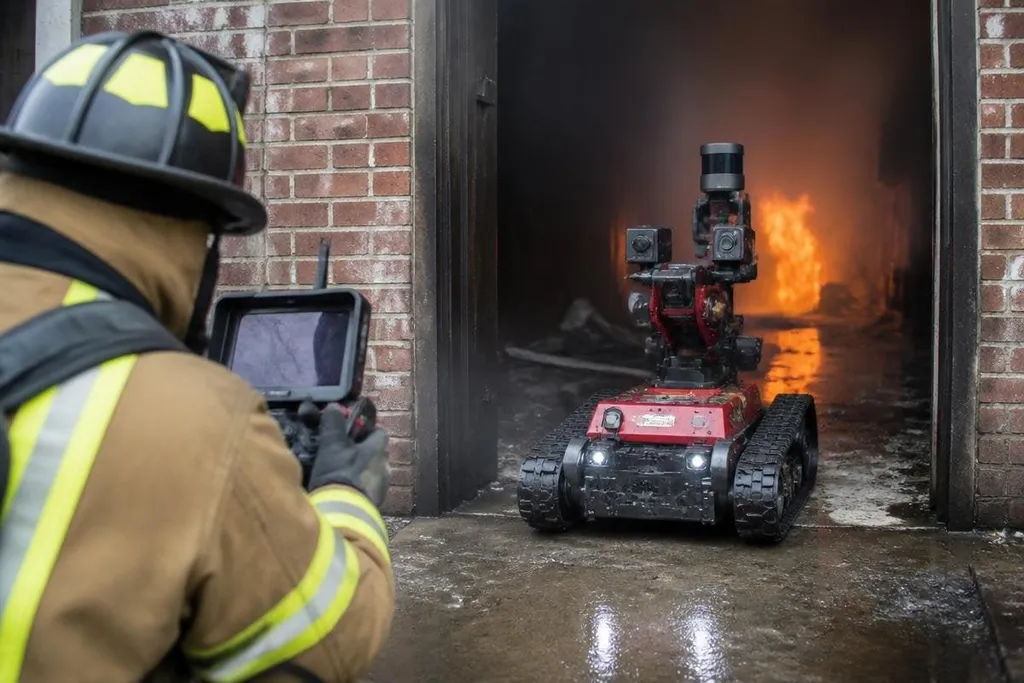
A firefighting robot may enter a burning building before a person does, but its value depends on what it can understand inside. AI helps the robot read sensor data, spot hazards, choose safer routes, and pass useful information to the crew outside.
- Faster readings from thermal and gas sensors
- Maps that change as the robot moves
- Human control when the software reaches its limits
Reading a dangerous scene
Heat, smoke, poor light, and falling material make indoor fire scenes hard to read. A robot can carry thermal cameras, regular cameras, microphones, LiDAR, or gas sensors, giving its control system several views of the same space.
The system can sort those inputs and point out patterns that need attention. A thermal image may show a hot door, while gas data may warn of a dangerous area. LiDAR, which measures distance with laser pulses, can help build a map when cameras cannot see far.
The software still needs clear limits. Smoke, steam, reflective surfaces, and damaged rooms can confuse sensors, so a warning from the robot should support a crew member's decision rather than replace it.
Choosing a route through smoke
A remote operator can steer a robot from outside, but a moving robot needs to react when the scene changes. By comparing its map with sensor readings, the robot can detect blocked paths and suggest another route.
That work matters when a hallway collapses or a door becomes too hot to pass. The robot can stop, reverse, or wait for a new command instead of continuing toward a hazard.
Autonomous movement also creates a safety problem. A route that looks open to software may have a weak floor, a trapped person, or a cable across the ground.
For that reason, systems need a clear handoff between automatic movement and teleoperation, where a person controls the robot from a distance.
Helping crews make decisions
Firefighters need useful information, not a stream of raw sensor readings. On the operator's screen, the system can sort images, mark changes on a map, and bring urgent alerts forward.
That information can support tasks such as checking rooms, locating heat sources, watching a damaged structure, or finding a safer position for the robot. The value depends on timing and accuracy. A late warning can be as hard to use as no warning at all.
A firefighting robot’s AI has to keep working when smoke blocks its camera and heat weakens its sensors. Reporting from Robot 24 can put those limits beside the machine, test site, and control method, leading to the human decisions the next section examines.
Where AI still needs help
Fire scenes change quickly, and the training data used to build an AI system may not cover every building, fuel type, weather condition, or sensor failure. A model can label a shape or heat pattern incorrectly when smoke hides the details.
Communications can fail too. Thick walls, metal structures, and damaged power systems may cut the link between the robot and its operator. The robot needs a safe stop mode, a way to report lost contact, and controls that remain clear under stress.
I'd treat AI as a decision aid until fire crews have tested a system across many building types and failure cases. A strong demonstration can show that the software works once; it cannot show how the robot behaves after a sensor breaks or the map becomes wrong.
A buying checklist for fire services
Before choosing a robot with AI features, check these points:
- Sensor coverage: Confirm which cameras and gas sensors it carries, and ask what each one can detect.
- Control modes: Test automatic movement, remote driving, and the switch between them.
- Link failure: Confirm what the robot does when the radio or network connection drops.
- Human alerts: Check how the system ranks warnings and how operators review the source image or reading.
- Training records: Ask which fire scenes, buildings, and sensor faults were used during testing.
- Crew practice: Run drills with the same controls, screens, and protective equipment used on duty.
These checks connect AI claims to the work a fire service needs the robot to perform. They also show which parts still depend on human judgment.
The next useful measure is simple: how often the robot gives a correct warning, reaches its assigned area, and stays controllable when the scene changes. Fire services should ask for those results before they trust AI inside a burning building.